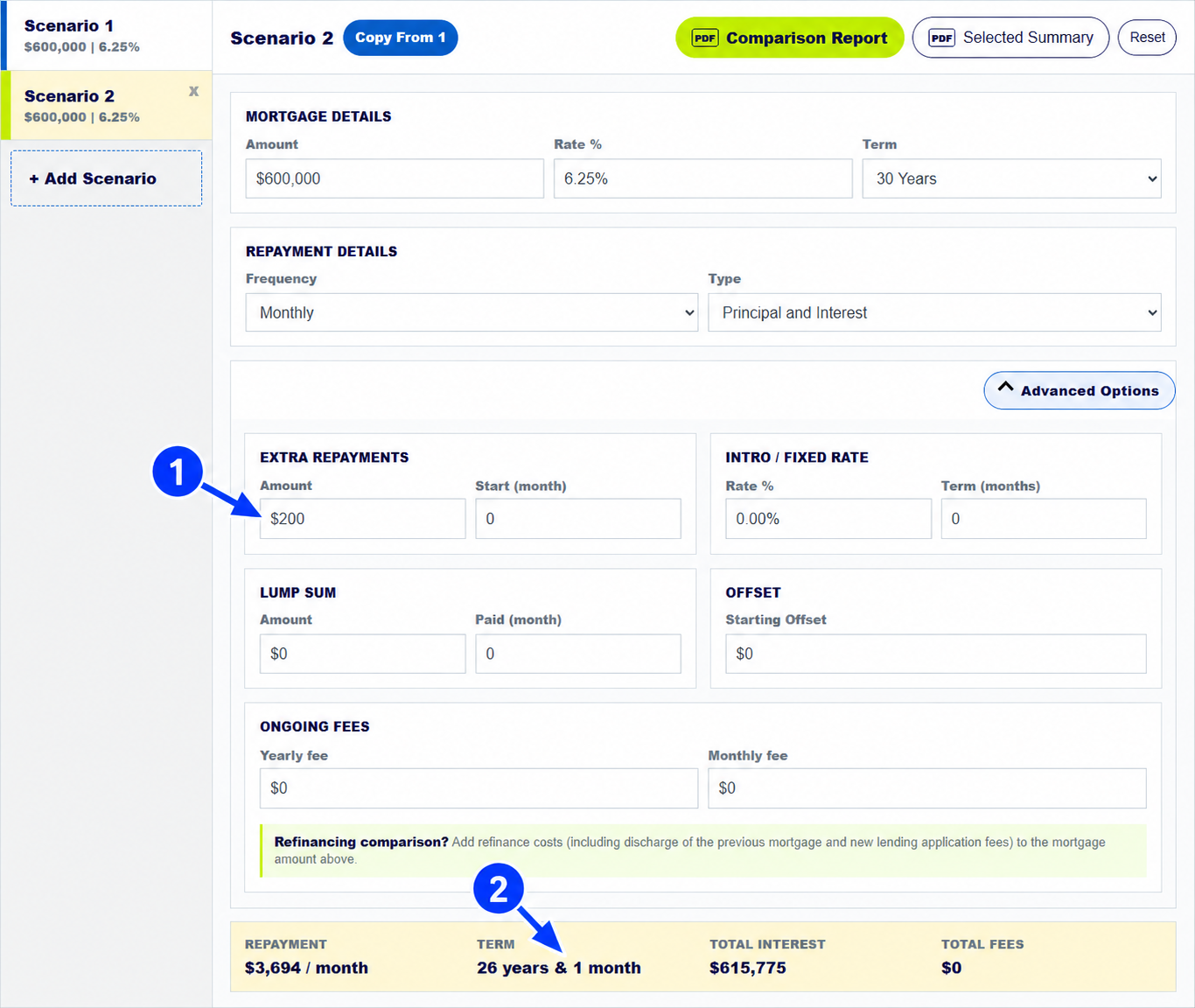
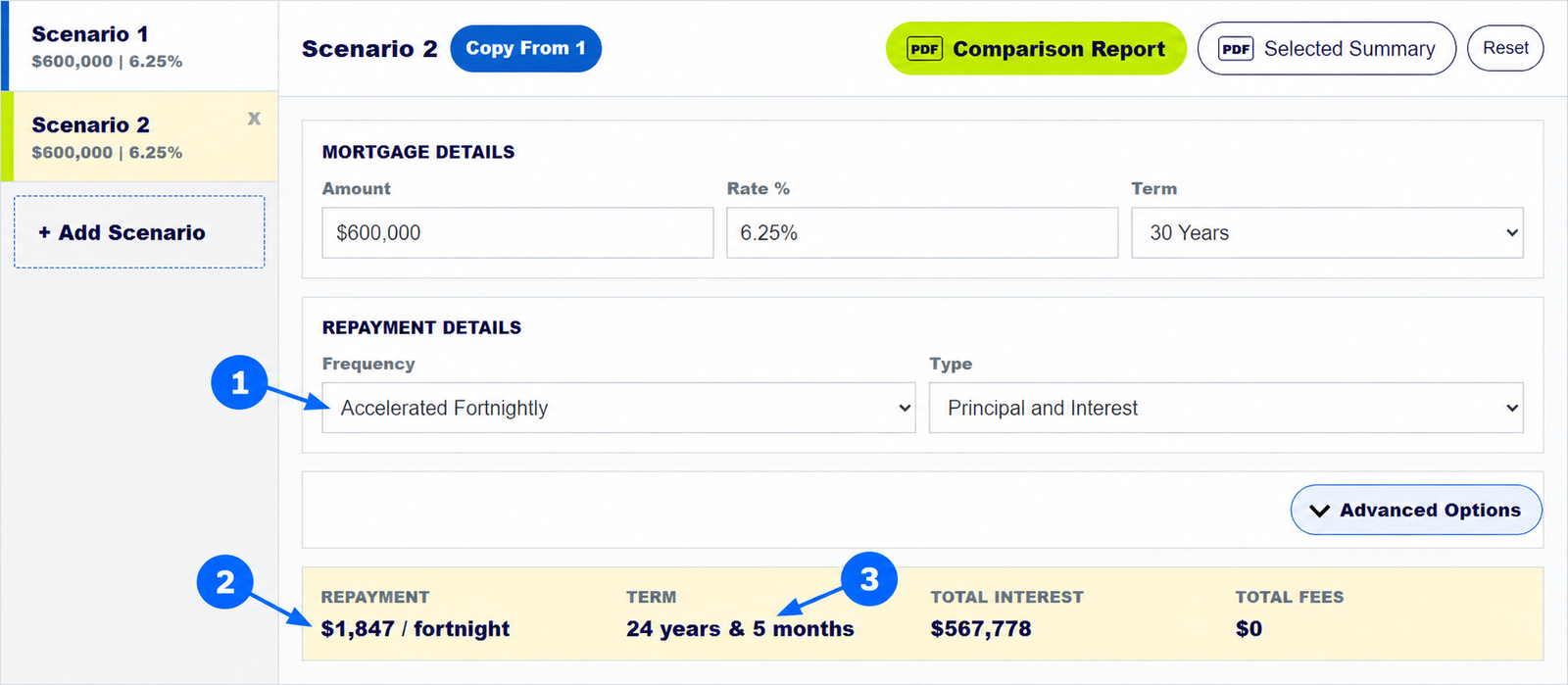
To compare repayment frequencies, keep the loan amount, rate and term the same in two scenarios, then change only Frequency. This calculator offers monthly, fortnightly, weekly and accelerated options. Accelerated fortnightly is different from simply dividing a year's monthly repayments into 26 equal amounts: it pays about half the monthly amount every two weeks, which adds up to more each year.
The numbered arrows on the real calculator screenshot above show the controls used in this example. Open the calculator to enter your own figures.
How do you change mortgage repayments from monthly to fortnightly?
Enter your loan details in Scenario 1 and choose Monthly. Select Add Scenario and Copy From 1. In Scenario 2, open the Frequency dropdown and choose Fortnightly for a true fortnightly amount or Accelerated Fortnightly for the higher-payment strategy shown in the screenshot. Compare the Repayment, Term and Total Interest results.
Check the lender's payment calendar and method before using a modelled saving as a plan. Product rules can differ.
How do accelerated fortnightly mortgage repayments work?
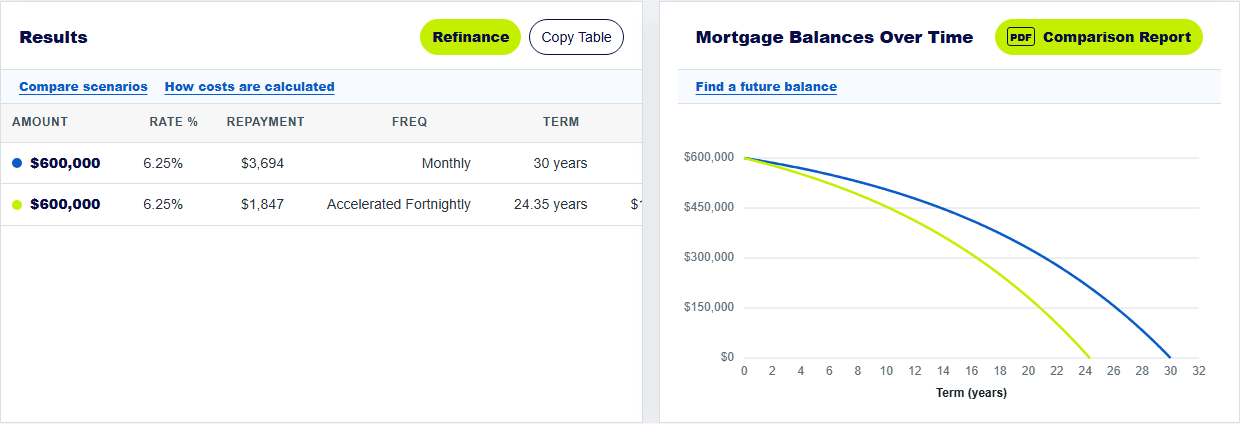
The example starts with a $600,000 loan at 6.25% over 30 years. The monthly scheduled amount is about $3,694. The accelerated fortnightly option models about half of that, $1,847 every two weeks. There are 26 fortnights in a year, so that is roughly 13 monthly payments rather than 12. The extra yearly amount helps reduce the balance faster.
Under the calculator's assumptions, the accelerated scenario has a projected term of 24 years and 5 months and about $162,171 less interest than the monthly baseline.
How is true fortnightly different from accelerated fortnightly?
True fortnightly spreads the scheduled repayment across fortnightly periods, aiming for a similar annual amount. Accelerated fortnightly uses about half the monthly amount each fortnight, so its annual outlay is higher. A shorter term is mainly the result of paying more over the year, not a magic saving from the word “fortnightly.”
Compare annual cash outflow as well as the amount per payment. If you cannot comfortably make the accelerated amount, a true fortnightly or monthly schedule may fit your budget better.
How do you compare weekly repayments without confusing the payment amount?
The same dropdown includes Weekly and Accelerated Weekly. Make a separate scenario for each frequency and read the repayment label beside its amount. Do not compare $1,847 per fortnight with $3,694 per month as if they were paid equally often. Convert them to a common period, such as a year, before judging affordability.
The full repayment schedule can confirm how often a payment is modelled and when the balance reaches zero.
Keep exploring: extra repayment guide, payoff-time guide. For home-loan product conditions, see MoneySmart on loan term and repayments.
Compare mortgage payment timing
Try monthly, true fortnightly and accelerated options with your own figures.
How does the home loan calculator compare payment frequencies?
Does choosing fortnightly in a mortgage calculator always save interest?
No. Savings depend on how much you pay over the year, when you pay it and how your lender calculates interest.
How does the home loan calculator compare true and accelerated fortnightly payments?
Accelerated fortnightly pays about half a monthly repayment 26 times a year, or about 13 monthly payments. True fortnightly aims for a similar yearly amount to the monthly schedule.
Can the calculator compare weekly home loan repayments too?
Yes. Frequency includes weekly and accelerated weekly options. Check the payment period label beside each result.
About this example: The screenshot compares a $600,000, 6.25%, 30-year principal-and-interest monthly baseline with an accelerated fortnightly version of the same loan, with no fees or offset. The lender's actual frequency rules may differ. Screenshots were captured from this calculator on 30 September 2026. Numbered arrows highlight important parts of the featured image. Results are estimates, not a lender quote or personal financial advice. Read the calculator assumptions.